
Flashing laps and roof integration
We check how flashing pieces overlap and where water is meant to shed. Small installation errors can act like a funnel during heavy rain or melting snow.
Serving Calgary, Alberta & surrounding areas
Mon–Fri 8am–6pm · Sat 9am–2pm
Skylight inspections · Calgary, Alberta
Get clear answers about leaks, drafts, condensation, and flashing before small skylight issues turn into ceiling stains or roof damage.
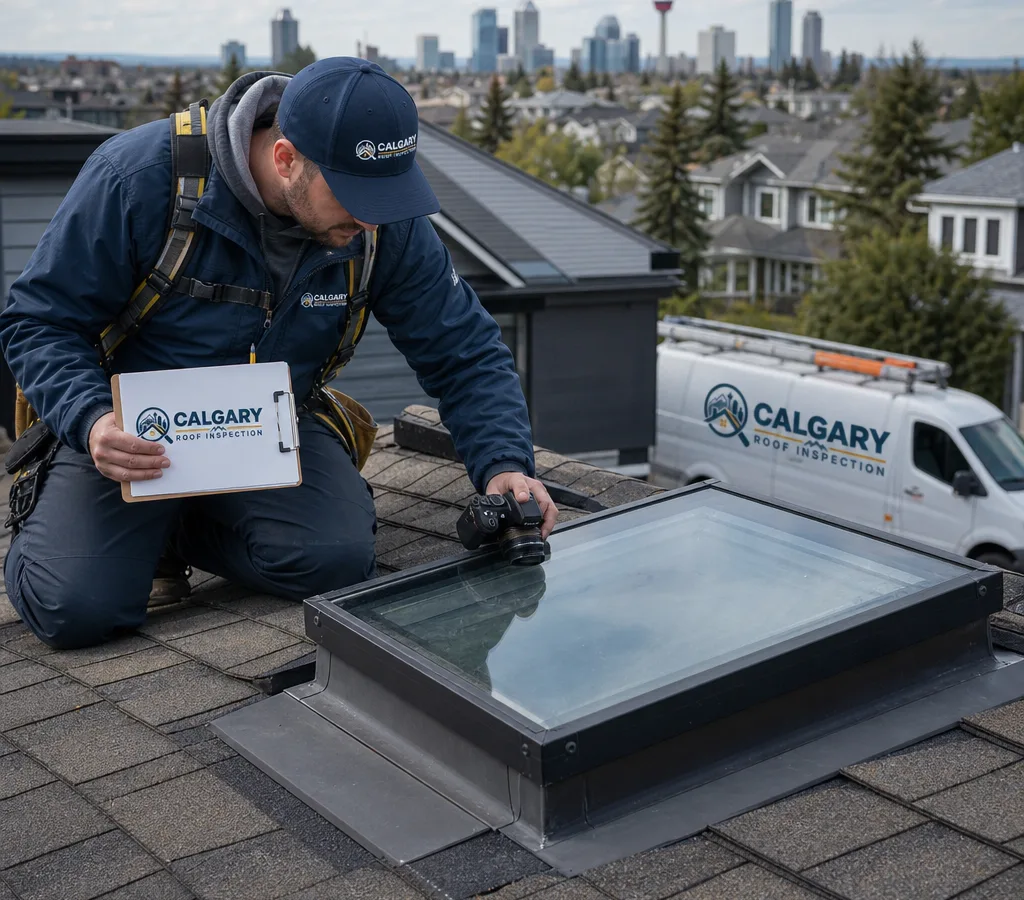
Leak-prevention assessment
If you are searching for skylight Calgary help because you have water marks, fogging glass, a musty smell, or ice buildup near a skylight, an inspection is the fastest way to stop guessing. A skylight is a roof penetration. Even when the skylight unit is in good shape, the surrounding details—especially flashing, fasteners, and seal transitions—decide whether it stays watertight through rain, Chinooks, and freeze-thaw cycles.
Calgary Roof Inspection provides skylight inspection work across Calgary, AB. The goal is simple: identify where water is getting in, or where it is likely to get in next, document it clearly, and outline practical next steps. Skylights can also be included as part of a full roof inspection in Calgary.
You receive a straightforward summary, photos of what matters, and recommendations based on what can actually be seen and verified.
Roof-level findings
Skylights can leak for different reasons, and the fix depends on the cause. During a skylight inspection, we concentrate on failure points that consistently create problems in real homes.
Flashing and underlayment at the perimeter: Step flashing, apron pieces, and head flashing must direct water back onto the roof surface. Missing, bent, face-nailed, or poorly lapped pieces can let water behind the system.
Curb condition and transitions: On curb-mounted skylights, the curb must be sound and properly protected. Swollen wood, lifted corners, and deteriorated cladding can allow water entry that looks like a glass issue.
Fasteners, exposed sealants, and patch history: A bead of caulk or roof cement is not a permanent skylight repair. We document where sealant is substituting for correct flashing so you can plan a durable fix.
Glazing and frame: Fogging between panes points to a failed insulated-glass seal. That is not always a roof leak, so we separate glazing problems from roof-detailing problems.
Interior symptoms: Staining at a skylight well can come from roof water, condensation, or air leakage. Its pattern and location help target the next step.
Because skylights sit high and are exposed on all sides, wind-driven rain and rapid temperature swings can reveal weak details quickly. The aim is to find that weak detail before the ceiling does.
Book Your Free Inspection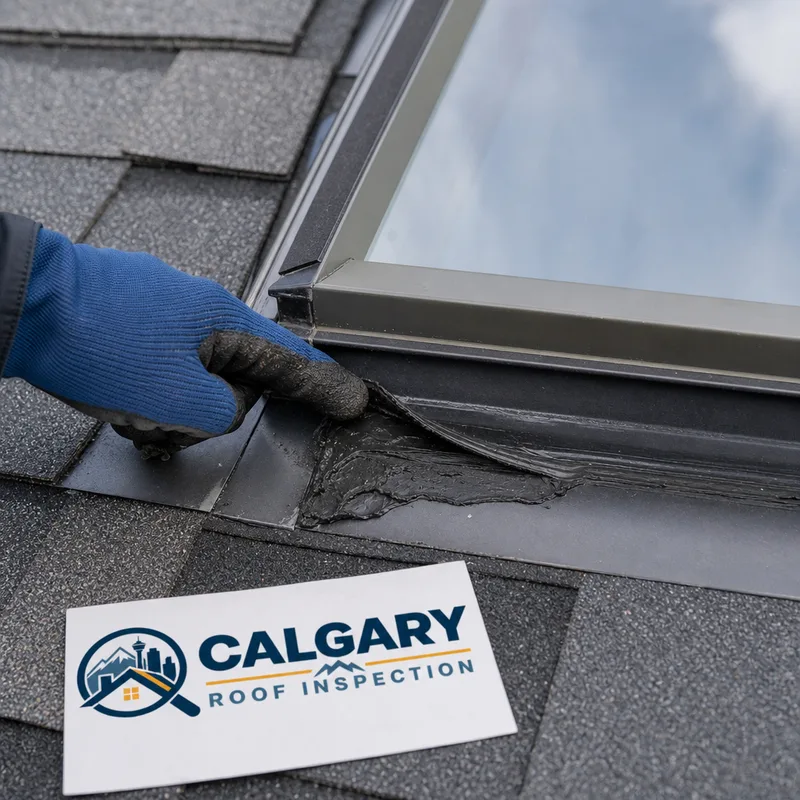
Early warning signs
We check how flashing pieces overlap and where water is meant to shed. Small installation errors can act like a funnel during heavy rain or melting snow.
UV exposure and temperature changes can harden gaskets and seals. We document visible cracking, shrinkage, and open joints around the skylight frame.
Tar, caulking, and exposed screws often indicate a prior surface repair. We note patch locations and what should be corrected underneath.
If indoor humidity and cold glass are causing moisture, the solution is usually ventilation and air sealing at the shaft—not exterior patching.
Soft decking, dark staining, and disturbed shingle courses can reveal a longer-term issue even when the skylight is not dripping today.
We start with what you are seeing—stains, dripping, drafts, or fogging—and any past repair attempts so the inspection focuses on likely failure points.
We look for staining patterns, bubbling paint, trim swelling, and moisture indicators that help distinguish roof-water entry from condensation.
We examine the frame, curb, and surrounding roof area, paying close attention to flashing details, shingle condition, and exposed sealants.
You receive clear photos and a written explanation of what was found, why it matters, and which next steps fit your skylight and roof type.
When appropriate, we explain whether the evidence points to flashing repair, re-sealing, targeted roof repair, or a skylight replacement conversation.
Calgary inspection costs
A skylight roof inspection in Calgary typically ranges from about $175 to $450, depending on roof height and pitch, skylight count, and how involved the moisture tracing needs to be. A single skylight check on an accessible roof is usually at the lower end, while multiple skylights, steep access, or active leak investigation can push pricing higher.
Your final cost depends on safe access, the number of skylights, snow or debris conditions, interior attic access when applicable, and the requested photo documentation and reporting. Exact pricing is confirmed once the property and inspection scope are understood.
Local roof conditions
Skylight issues often look the same from inside, but the cause can vary by roof style and exposure. In established communities like Brentwood and Haysboro, many homes have older roof assemblies that have seen multiple re-roofs. Each re-roof is an opportunity for skylight flashing details to be changed, reused, or covered incorrectly.
In areas with a mix of newer and infill construction like Altadore, skylights may be newer but still vulnerable if flashing was rushed, shingles were installed tight to the frame, or ice-and-water protection was not handled correctly at transitions.
In hillside communities such as Signal Hill, wind exposure can drive rain and fine snow toward roof penetrations. Even a small opening at the head flashing can turn into a noticeable interior stain under the right wind conditions.
No matter the neighbourhood, the inspection approach is the same: verify the skylight and roof interface on the roof surface, then match those findings to what appears inside so the repair scope is specific and realistic.
Homeowner evidence
“We had a stain by our skylight that kept coming back after it rained. The inspection photos made it obvious the water was getting in above the skylight, not through the glass. Having that explained clearly saved us from paying for the wrong repair.
“They pointed out old caulking and a flashing issue around the curb that we never would have noticed. The written notes were easy to hand to the contractor doing the fix.
Common questions
Condensation usually appears on the inside surface of the glass or becomes worse during cold snaps, while a leak more often leaves staining that spreads from a consistent point after rain or snowmelt. We compare interior moisture patterns with roof-level details such as flashing laps, shingle integration, and seal condition.
Yes, as long as the roof can be accessed safely and the skylight area is sufficiently visible. Snow may limit what can be verified on the roof surface, but winter inspections can still identify condensation, air leakage, and interior moisture clues around the skylight well.
If the frame and glazing are sound but water is entering at the perimeter, correcting or replacing the flashing is often appropriate. A targeted re-seal may help when the issue is confined to a gasket or joint, but sealant is not a substitute for proper flashing when the leak path is behind the roofing layers.
Yes. Water can travel along roof decking, rafters, or inside the skylight shaft before appearing as a ceiling stain. We therefore examine the roof surface around and uphill of the skylight, nearby penetrations, and the relationship between those details and the stain location.
Most skylight inspections take about 45 to 90 minutes depending on roof access, the number of skylights, and whether an active leak must be traced. The scope can be expanded during the visit when a more complete assessment of the whole roof is needed.
Provide clear access to the rooms under the skylight and note when moisture last appeared, such as during rain, melting snow, or strong wind. Photos taken while the leak was active and paperwork from prior skylight or roof work can also help identify which details may have changed.
Get clear answers
Tell us what you are seeing and where the skylight is located. We will confirm what can be inspected safely, then provide a clear written assessment you can use to plan the right repair.