
Membrane condition and seams
Checks for open laps, splitting, punctures, surface wear, and past patch work that may be failing, especially around field seams and terminations.
Serving Calgary, Alberta & surrounding areas
Mon–Fri 8am–6pm · Sat 9am–2pm
Flat roof inspections · Calgary, Alberta
Get clear, contractor-ready findings before small membrane issues turn into leaks, interior damage, or emergency repairs.
Start with clear findings
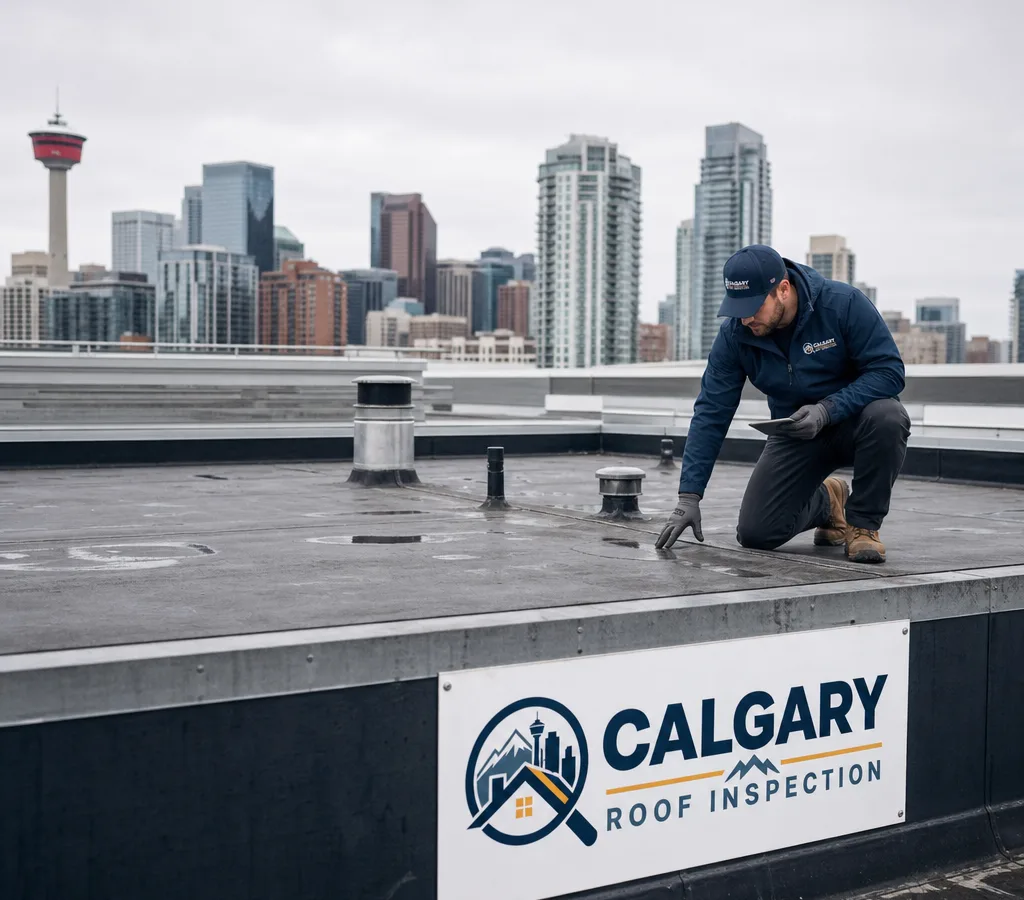
Most property owners are trying to solve one problem: they need someone who can evaluate a flat roof properly and explain what to do next. Flat systems fail differently than steep-slope shingles. Leaks often travel, ponding can hide damage, and issues at penetrations, parapet flashings, and drains can look fine from the ground.
If you are comparing flat roofing companies Calgary homeowners and building managers hire, focus on who can diagnose the roof as a system, document conditions, and translate that into a practical scope. Our team at Calgary Roof Inspection provides thorough roof inspections that help you decide whether you need monitoring, targeted repairs, or a replacement plan, and what to ask any contractor who prices the work.
A good inspection for a low-slope roof should answer, in plain language: where water is getting in—or is likely to—what is causing it, what is urgent, what can wait, and what options you have for addressing it without guessing.
Flat-roof inspection scope
Checks for open laps, splitting, punctures, surface wear, and past patch work that may be failing, especially around field seams and terminations.
Notes ponding areas, blocked drains or scuppers, and slope issues that keep water on the roof longer than it should.
Looks closely at parapet cap details, wall transitions, and edge metal where wind, freeze-thaw, and movement often open pathways for water.
Assesses boots, curbs, pitch pockets, skylight details, vents, and mechanical tie-ins, since most recurring leaks start at penetrations.
Connects roof findings with ceiling staining, wall moisture, and attic or deck observations where accessible, because the leak point and the drip point are rarely the same.
Documents conditions so you can request apples-to-apples pricing from flat roofing contractors in Calgary without relying on vague descriptions.
Local roof conditions
Low-slope roofs in Calgary take a beating from big temperature swings and long cold stretches where snow and meltwater can linger. When water sits on a membrane, it finds weak points: seams, corners, and transitions. Freeze-thaw cycles can widen small openings, and wind can stress edge details and flashings.
That is why the best Calgary flat roofing companies do more than look for obvious holes. They pay attention to drainage paths, scuppers and drains, parapet edges, and the small construction details that control how water leaves the roof.
If your building is in an older inner-city area with more rooftop add-ons over time, penetrations are often the deciding factor. If you are in newer communities where roof designs may include complex mechanical layouts, curb and flashing details matter just as much. An inspection should reflect the real roof you have, not a generic checklist.
When you request an inspection, it helps to share what you already know: where you see staining, when leaks show up—only during thaw, only with wind-driven rain, or after heavy storms—and whether any repairs were done in the past. That context makes the findings more actionable.
Book Your Free Inspection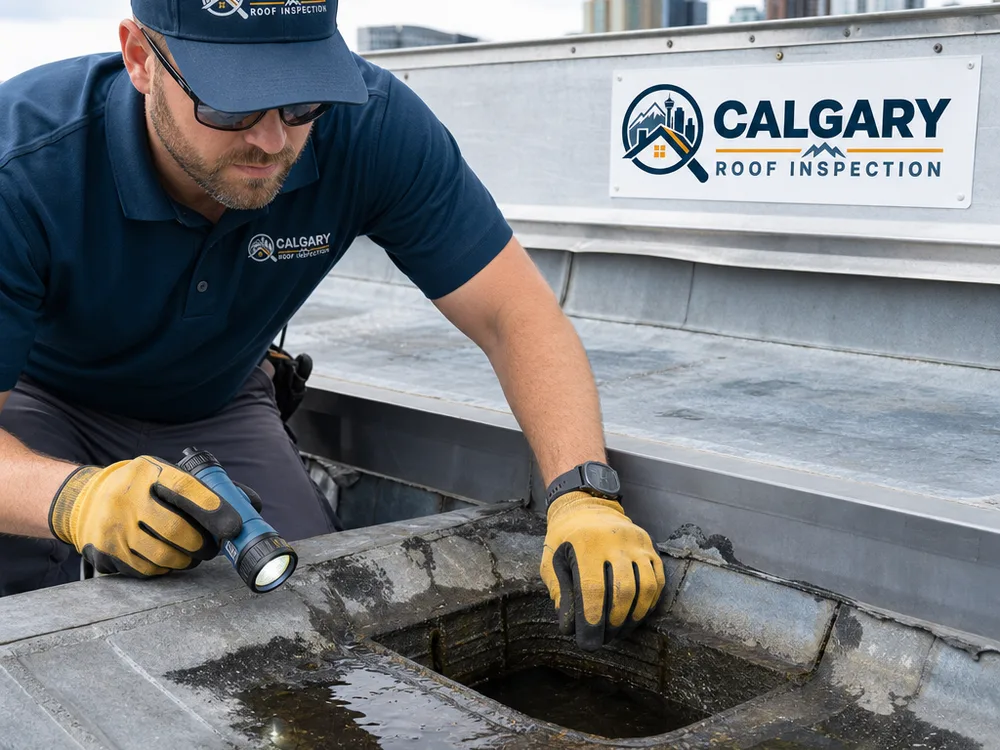
From inspection to scope
We identify likely leak sources and note roof components that drive repair scope: edges, penetrations, drains, transitions, and prior patches.
You get a clear record of what was observed, where it is located, and why it matters, so you are not relying on memory or a single verbal opinion.
We separate active leak risks from maintenance items. This helps you decide what to address immediately and what to plan for in a future budget cycle.
A written scope helps you compare pricing from flat roofing contractors Calgary property owners consider, because each bidder is pricing the same repair areas and details.
If a contractor recommends a different approach, you can cross-check it against the documented conditions and ask better questions about warranties, details, and exclusions.
Calgary inspection costs
Most flat roof inspections in Calgary typically range from about $250 to $650+, with larger commercial roofs, harder access, and more detailed reporting landing at the higher end. A smaller residential garage or addition roof is usually closer to the low end, while multi-area roofs with many penetrations and drainage points take longer to document.
Final pricing depends on roof size, height and safe access, complexity—parapets, equipment, and multiple levels—visible damage, and whether past repairs need to be traced and evaluated. The exact cost is confirmed when booking based on your roof details and access.
If you are collecting quotes from flat roofing companies, start with a documented inspection so the work you approve matches what the roof actually needs.
Call for a Free EstimateCommon questions
Get an inspection first when the leak source is unclear or you want comparable quotes, because a documented scope prevents guesswork and missed details. A repair quote can work when the issue is obvious and isolated, but flat-roof leaks often originate at a different location than where water shows up inside. If you want an unbiased overview of roof condition, start with roof inspection findings and then invite contractors to price the same items.
They start with the highest-risk details: penetrations such as vents, HVAC curbs, and skylights; membrane seams and terminations; parapet and edge flashings; and drainage points like drains and scuppers. On low-slope roofs, ponding areas and past patch work also get extra attention because they can hide ongoing moisture entry.
Often yes, because many flat-roof leaks come from visible defects at flashings, seams, and drains, but not always. If water has migrated under the membrane or through layers, the most responsible next step may involve targeted testing or opening a small area as part of a repair plan. An inspection still narrows the likely sources and prevents random patching.
Scheduling depends on season and weather, but the best results come when the roof surface is safe to walk and details are visible. If water is actively entering the building, document interior symptoms right away—photos, locations, and timing—so the inspection can connect roof findings to what you are seeing inside.
Have the roof type if you know it, approximate building size, how many roof levels there are, and how access works—hatch, ladder, or controlled access. Also share when the leak happens, such as during heavy rain, thaw, or wind, and any prior repair history, because those details help narrow the likely pathways.
Maintenance addresses conditions that can lead to leaks, such as drain cleaning, minor sealing at select details, and monitoring worn areas, while a repair fixes a defined failure like an open seam, puncture, or failed flashing detail. A good inspection calls out which items are preventative and which items are already creating water-entry risk.
Get clear next steps
Share what is happening on your roof and what kind of building you have. We will confirm safe access, complete a thorough flat-roof inspection, and provide clear next steps you can use when speaking with Calgary contractors.